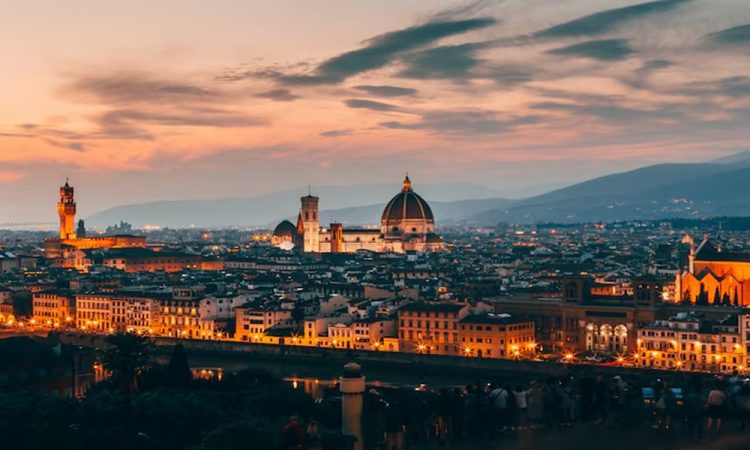
Italy has a way of making time feel fluid. In Rome, the past towers over the present in marble and stone. In Florence, the Renaissance still breathes through its cathedrals and courtyards. And in Venice, history floats quietly on the water, whispering through every reflection.
While most travelers explore these cities separately, connecting them reveals something deeper: how each era in Italy’s story flows into the next. A well-planned Rome, Venice, Florence package tour gives history lovers the rare gift of perspective – from the Colosseum’s echoes of gladiators to the frescoes that sparked Europe’s rebirth, all the way to the Gothic arches that rise above Venetian canals. For those who prefer structure with freedom, Rome, Florence and Venice tour packages often include expert-led walks through landmarks and lesser-known corners, giving each city context and connection without the stress of logistics.
Choosing the right Rome, Venice, Florence package tour means experiencing history as it was meant to be felt – not just as museum exhibits, but as moments you walk through. Some itineraries curated by travel experts, including those offered through Travelodeal, include guided routes and cultural stops that highlight how Rome’s legacy shaped Florence’s art, and how both influenced Venice’s elegance. It’s travel that feels like a story unfolding – at once scholarly, sensory, and profoundly human.
Rome: Where Empires Begin
No history lover’s journey starts anywhere else but here. Rome is a paradox – eternal yet ever-changing. The Roman Forum, once the heart of a vast empire, now lies in graceful ruin. The Colosseum stands defiant against time, while nearby churches rise from what were once pagan temples. Walk the streets, and layers of history overlap – Imperial columns beside Baroque fountains, Renaissance palaces standing on ancient foundations.
To truly absorb Rome’s story, wander beyond the landmarks. In Trastevere, cobbled lanes still echo with medieval life; in Ostia Antica, you can stroll through an ancient port city almost perfectly preserved. Every corner feels like an open-air archive, alive with memory.
Florence: The Renaissance Reimagined
If Rome teaches us power, Florence teaches us possibility. Here, art and intellect merged to redefine what it meant to be human. The city’s skyline, crowned by Brunelleschi’s dome, marks the birthplace of the Renaissance – a revolution that still shapes modern creativity. Step inside the Uffizi Gallery, and you’ll find Botticelli’s Venus and da Vinci’s early sketches – visions that changed how the world saw itself.
But history isn’t just kept behind glass in Florence. It’s in the streets – in the goldsmiths along the Ponte Vecchio, in the frescoed courtyards of palaces still inhabited, and in the scent of espresso wafting through medieval alleys. To walk here is to feel history’s pulse in every stone.
Venice: The Floating Archive
Venice feels like the dream that history refused to let fade. Its palaces rise directly from the sea, their foundations laid by merchants who built an empire not of conquest, but of trade and art. St. Mark’s Basilica glimmers with Byzantine mosaics, a reminder of the East-West connections that shaped the city’s soul. The Doge’s Palace stands beside it – a masterpiece of political theater carved in marble.
Yet the magic of Venice is not just in its monuments but in its resilience. Every tide, every reflection, feels like a reminder that history, though fragile, can endure beautifully.
How to Experience It All
Combining these three cities into one itinerary isn’t just practical – it’s poetic. Rome gives you the roots of civilization, Florence the flowering of culture, and Venice the art of endurance. Traveling between them by high-speed train makes it easy to see how Italy’s past evolved naturally, each city passing its light to the next.
For history enthusiasts, guided city passes, flexible stays, and timed entries can make all the difference between sightseeing and storytelling. The right itinerary allows you to move seamlessly between ruins, frescoes, and canals – understanding how the pieces fit together across centuries.
Final Thought
To love history is to chase connections – between people, places, and ideas. In Italy, those connections are everywhere, written in marble, painted in light, and sung in the tolling of bells. Rome, Florence, and Venice aren’t just cities to visit; they’re chaptered in one epic tale. And for the traveler who follows them in sequence, the story doesn’t end when the flight home begins – it lingers, echoing like footsteps on ancient stone.